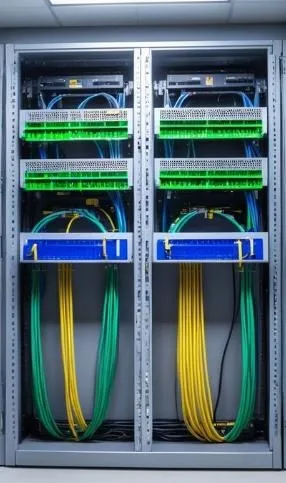

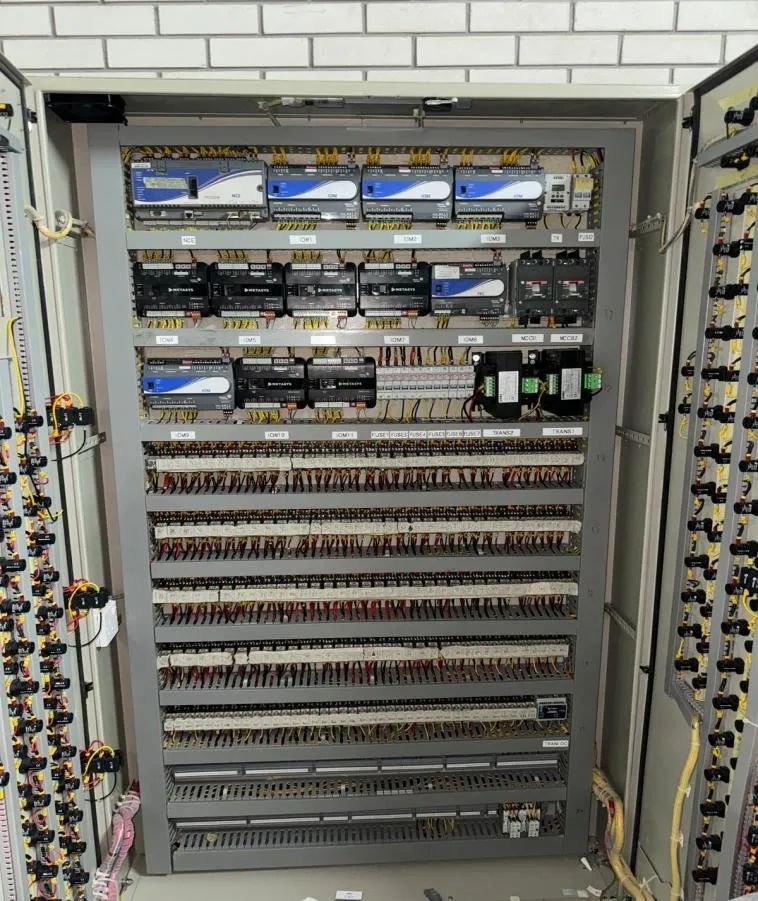
There is a moment in every project when the cables are in, the panels are fixed, the screens are mounted and everyone relaxes. It looks finished. It is not. A building is finished only when every system has been tested, commissioned, documented and handed over to people who know how to use it. This stage is also where the quality of a subcontractor shows most clearly.
This guide explains each stage in practical terms for owners, consultants and facility managers in Kuwait: what is tested, in what order, which documents to expect and how to keep systems healthy for years afterwards. It applies to power, lighting, ELV systems, fire alarm, CCTV, access control, PA and BMS.
Testing and commissioning: two different jobs
Testing checks the parts. Is this cable insulated correctly? Does this detector respond? Is this breaker set to the right value?
Commissioning proves the whole. When a fire alarm triggers, do the lifts return, doors release and fans stop? When a chiller fails, does the BMS alarm reach the right person? Do the systems that depend on each other work together?
The general concept is described on Wikipedia's commissioning page, and many countries have formal guidance such as that published by ASHRAE for building systems. The details of your project are set by the specification.
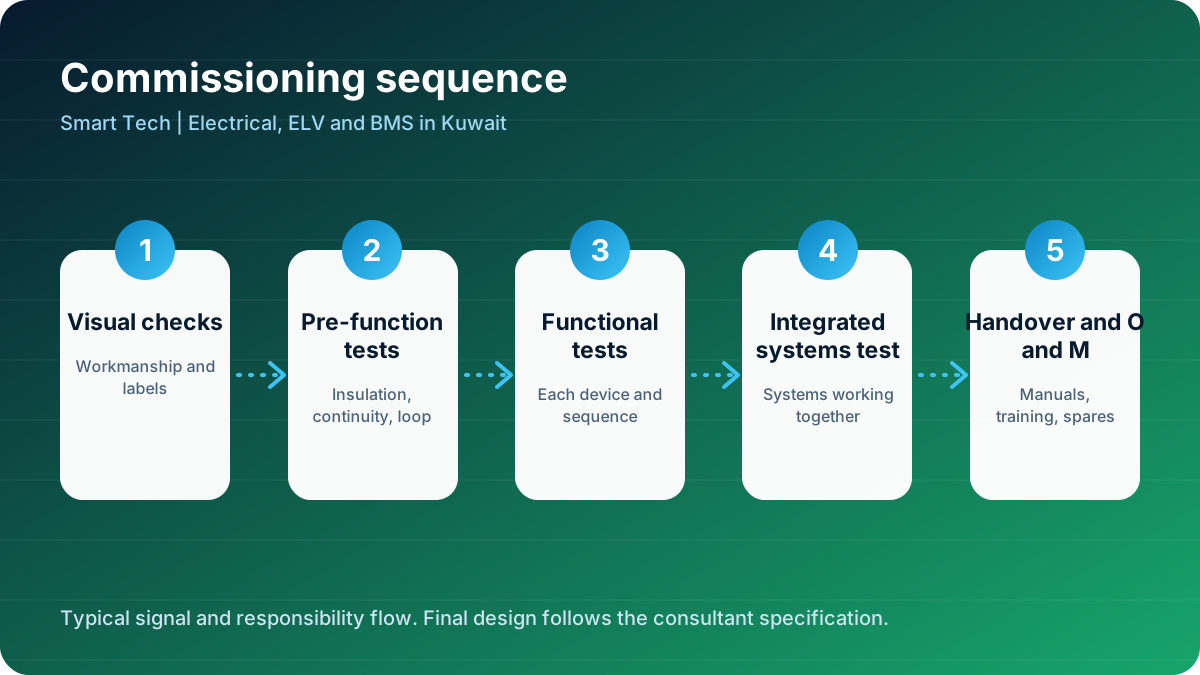
The commissioning sequence
1. Planning and documents
Before testing, agree the test procedures, acceptance criteria, witnesses and dates. Prepare test sheets for each system. Confirm that required approvals, drawings and materials are in place. Good planning prevents repeated visits and arguments about what counts as a pass.
2. Visual and workmanship checks
Compare the installation with the drawings. Check labelling, containment, supports, glands, fire stopping and cleanliness. Record defects as a snag list and fix them before functional testing.
3. Pre-functional tests
These tests are carried out before equipment is energised or put into operation.
- Cable insulation resistance and continuity for power and control cables.
- Earth continuity and earth resistance.
- Fibre and copper certification for data cabling, as explained in our article on structured cabling.
- Loop resistance and device counts for fire alarm circuits.
- Torque checks on terminations.
- Point-to-point checks of BMS and control wiring.
4. Energisation and functional tests
Energise in a safe, planned order. Test every device and function.
- Panels and breakers: operation, interlocks, protection settings and changeovers. See power distribution and switchboards.
- Fire alarm: every detector and call point, sounders, interfaces and battery backup.
- CCTV: camera views, recording, playback and export.
- Access control: every reader, lock, door contact and exit button.
- PA and voice alarm: zones, message playback, levels and intelligibility.
- BMS: every input and output from field device to graphic, then each sequence of operation.
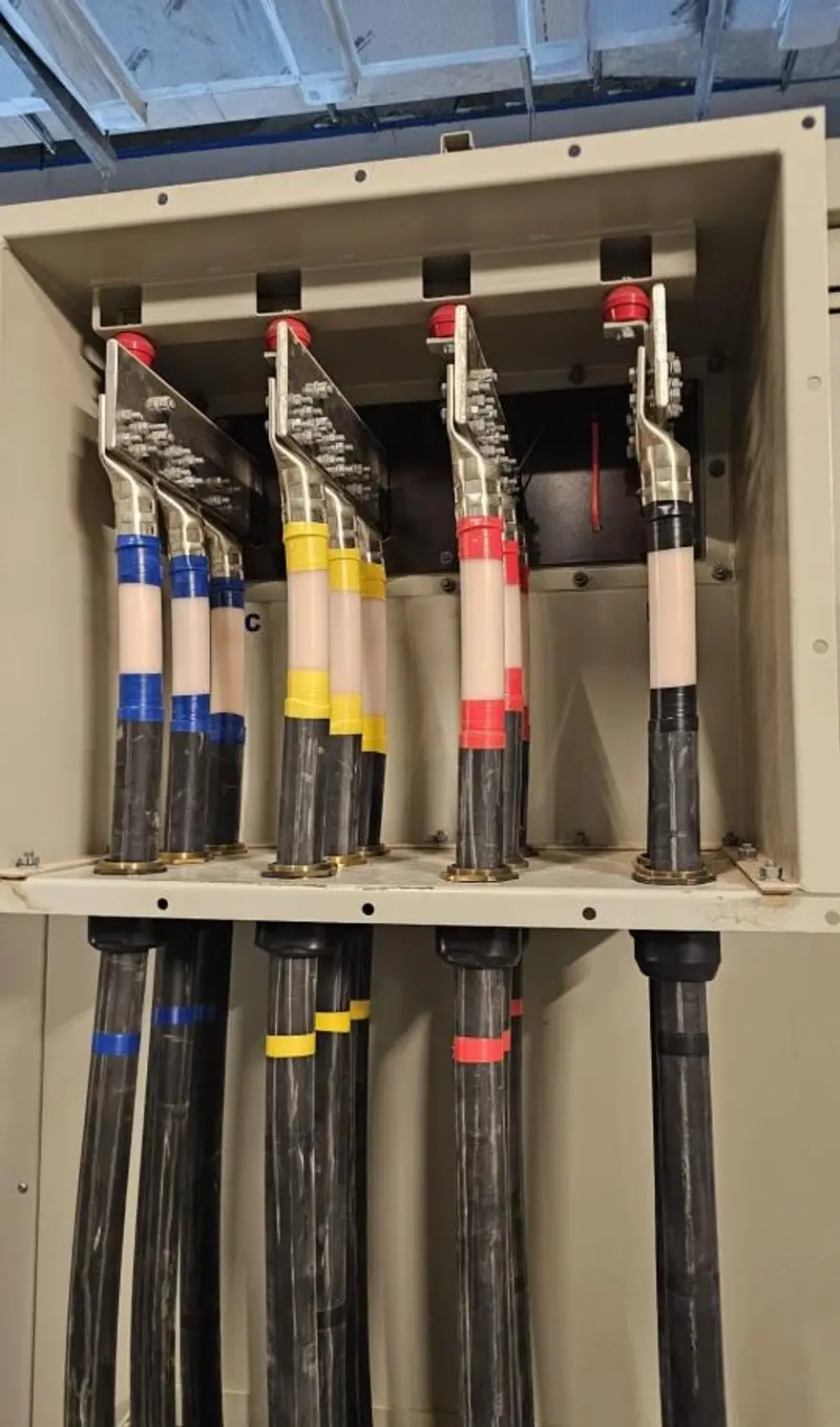
5. Integrated systems testing
Integration tests are the most valuable and the most often skipped. They check that systems behave correctly together. For example:
- A fire alarm activation releases access control doors, returns lifts, stops ventilation and starts voice messages.
- A power failure causes the generator to start, loads to transfer and the BMS to report the event.
- A door forced open triggers an alarm and shows the relevant camera view.
Write these scenarios into a cause and effect matrix and test each row. Record the result with date, time, witness and any corrective action.
6. Seasonal and performance testing
Some systems cannot be fully proven in one visit. A BMS may need testing in both summer and winter conditions, and chiller plant may only reveal problems under full load. Plan follow-up checks and make the contractor responsible for tuning during the defects period.
7. Training and handover
Operators should be trained on the real system, with their own procedures. Provide user guides, quick reference sheets and recorded sessions if possible. Handover is complete only when the owner has accepted the system and received the documents.
The handover package: what you should receive
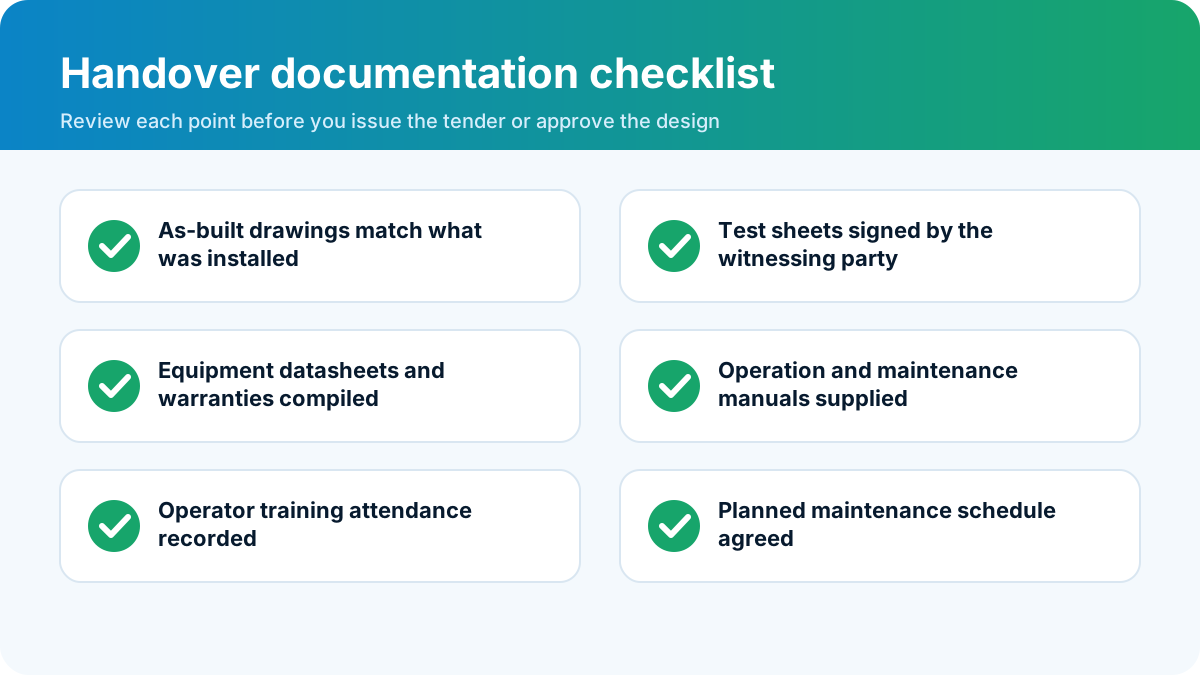
A complete handover package includes:
| Document | Purpose |
|---|---|
| As-built drawings | Show what was really installed |
| Test certificates and reports | Evidence of quality |
| Equipment data sheets | Reference for replacement |
| Operation and maintenance manuals | How to run and look after the systems |
| Software backups and passwords | Allows recovery and ownership |
| Warranty certificates | Defines cover and contacts |
| Spare parts list | Fast response to failures |
| Training records | Proof that operators were trained |
| Maintenance schedule | Plan for planned preventive work |
Hold back part of the final payment until the documents are complete. It is a fair and effective incentive.
Common problems found during commissioning
- Missing power or cooling to panels and equipment rooms.
- Wrong or unlabelled cables.
- Unfinished interfaces between systems supplied by different contractors.
- Incorrect settings copied from default templates.
- Equipment installed but not approved by the consultant.
- Mechanical plant not ready, which delays BMS commissioning.
- Unrealistic programme that leaves no time for testing.
The most common root cause is a late start. Protect time for commissioning in the programme. It is never wasted.
Planned maintenance: keeping the building honest
After handover, systems begin to age. Dust accumulates, batteries weaken, firmware becomes outdated and settings get changed. A planned maintenance schedule slows this decline.
Principles
- Follow the standard and the manufacturer. Life-safety systems have defined test routines.
- Record everything. Tests, faults and corrective actions go into a logbook.
- Fix root causes. Silencing alarms does not solve problems.
- Plan for the Kuwait climate. Dust and heat shorten the life of filters, fans and batteries.
- Keep spares of items that fail most often.
Typical schedule
| Frequency | Examples |
|---|---|
| Weekly | Fire alarm call point test, check that CCTV recorders are recording |
| Monthly | Review alarm logs, check panels and UPS indications, test PA announcements |
| Quarterly | Clean sensors and lenses, test battery condition, review access control rights |
| Annually | Thermal imaging of panels, full fire alarm test, BMS calibration and backup, firmware review |
Preventive versus reactive maintenance
Reactive maintenance waits for failure. Preventive maintenance inspects and replaces parts on a schedule. Preventive work costs less than emergency repairs, avoids downtime and gives better records. A service agreement with defined response times turns this into a predictable cost.
Maintenance contracts: what to include
- Scope by system and by location.
- Visit frequency and the checks at each visit.
- Response times for emergency and routine faults.
- Spare parts policy, including what is covered.
- Reporting: a written report after each visit.
- Exclusions such as vandalism or misuse.
- Contact and escalation details, including after-hours.
- Review meetings to look at trends and recurring faults.
Maintenance in Kuwait's areas
Maintenance needs differ by type of building and location.
- Mubarak Al-Kabeer has well planned residential and institutional buildings where regular checks of fire alarm, PA and access control protect large numbers of people. See Mubarak Al-Kabeer.
- Farwaniya includes dense commercial and mixed-use buildings with many small tenants, so clear records and quick response matter. See Farwaniya.
- Kuwait City and Hawalli have towers and malls with complex plant where preventive maintenance and monitoring pay back quickly. See Kuwait City and Hawalli and Salmiya.
- Al Ahmadi and Al Jahra include industrial and educational sites that need rugged equipment and regular cleaning. See Al Ahmadi and Fahaheel and Al Jahra.
A simple maintenance logbook
Keep a log for every system with these columns: date, system, location, task, result, person, next due date. A spreadsheet is enough. Over time, patterns appear: the same detector triggers false alarms, the same camera loses signal, the same pump trips. The log turns small annoyances into data, and data into decisions.
Using monitoring to support maintenance
Modern systems can alert you before they fail. A BMS can warn of abnormal temperatures, a power meter can show rising load, a network monitor can show failing links and a CCTV recorder can report disk errors. Use these alerts, but make sure someone is responsible for reading them. An alarm that nobody sees is not monitoring.
Questions to ask at handover
- Have all test results been signed by the witnessing party?
- Do the as-built drawings match the building today?
- Do we have administrator access and backups for every software system?
- Who do we call at night if a life-safety system shows a fault?
- When is the first planned maintenance visit?
- When does each warranty start and end?
A short example: commissioning a fire alarm and access control interface
To make the process concrete, consider one interface in a five-storey office building: the link between the fire alarm and the access control system.
The design states that on any fire alarm, all doors on escape routes must unlock, and the lift lobby doors must remain accessible to responders. The cause and effect matrix lists each door and the expected behaviour. During commissioning the team follows a simple routine.
- Confirm the interface hardware. A monitored relay output on the fire panel connects to an input on the access controller. The circuit is checked for continuity and supervision.
- Test one door first. The fire panel is put in test mode and an alarm is triggered in one zone. The door controller should release the lock, the software should log the event and the door should open freely.
- Test every door in the schedule and record each result, with the time and tester's name.
- Test the reset. After the fire panel is reset, doors should return to normal behaviour, and the log should show the sequence.
- Test failure modes. Disconnect the interface cable and confirm that the system reports a fault, and check what the doors do. The design must say which result is acceptable.
- Witness and sign. The consultant and the fire authority representative, where applicable, witness the test and sign the record.
This one interface may take several hours to test properly. Multiply that by every interface in a large building and the importance of planning time for commissioning becomes clear.
Why documentation is part of the product
Owners sometimes treat documents as paperwork. In practice, they are part of the product you paid for. When a technician arrives at midnight to fix a failure, the documents decide whether the job takes twenty minutes or four hours. Good drawings show where the cables run. Good test reports show what normal looked like. Good manuals show which settings are correct. When the building is extended in five years, the new contractor will start from these documents. Insist on them, store them in more than one place and update them with every change.
Who is responsible for what
Clear responsibility prevents delays. The contractor prepares test procedures, performs tests, records results and corrects defects. The consultant or owner's representative reviews procedures, witnesses key tests and accepts results. The authority inspects life-safety systems. The owner's facility team attends training, receives documents and takes over operation. When the roles are written into the contract, commissioning proceeds smoothly. When they are vague, each party waits for the other.
Warranty and the defects period
Handover starts the warranty and defects period. During this time, the contractor must fix defects without charge, and the owner must keep records of problems and report them promptly. Treat the first year as a second round of commissioning: seasonal changes, real occupancy and real use reveal issues that no test could show. Hold a review meeting at about six months and again before the end of the warranty. Use these meetings to list outstanding defects, confirm that settings are still correct and check that the maintenance schedule is working. A contractor who takes part willingly in these reviews is one who stands behind the work.
Work with us
We test and document every system we install, and we offer maintenance support after handover. If you are preparing for commissioning, or you have an existing building where systems have never been properly documented or tested, send us your drawings and a short description. We will propose a clear scope, including testing, documentation and a maintenance plan. Use our quote form or call +965-51133630. You can also explore our quality and HSE approach and the full range of services.
A system that is installed well and then forgotten becomes a liability. A system that is tested, documented and maintained becomes an asset that lasts for decades.
Frequently asked questions
What is the difference between testing and commissioning?
Testing checks that individual components and circuits meet requirements, for example cable insulation or a detector's response. Commissioning proves that complete systems work together as designed and are ready for the owner to use.
Who should witness the tests?
The consultant or the owner's representative normally witnesses key tests, and the authority witnesses life-safety tests. The contractor prepares the procedures and records the results.
What documents do I receive at handover?
As-built drawings, test certificates, equipment data sheets, operation and maintenance manuals, software backups, passwords, warranties, spare parts lists and training records.
How often should systems be maintained?
Frequency depends on the system and the standard. Life-safety systems have strict test routines. Other systems benefit from quarterly or annual preventive maintenance.
Is a maintenance contract worth it?
For critical systems it usually is, because it defines response times, schedules and responsibilities, and it keeps records that authorities and insurers may ask for.